
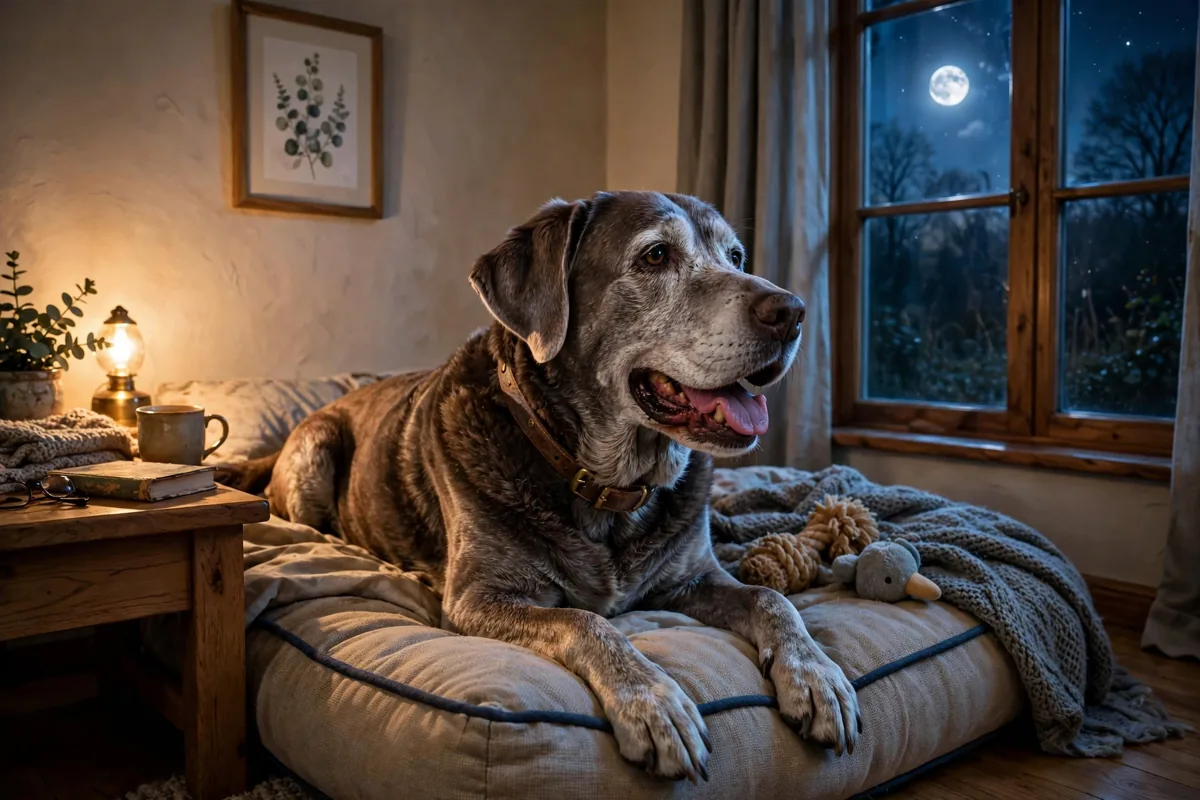
It’s 2 a.m., the house is quiet, and instead of sleeping, your old dog is panting — again. Here is the short answer first: a senior dog panting at night is usually trying to tell you something. The most common reasons are pain, anxiety, a room that is too warm, needing to go outside, or an age-related health change such as cognitive dysfunction, heart or lung disease, or a hormone problem. Panting is not always an emergency, but in an older dog it should never be brushed off as “just getting old.” This guide covers the nine causes vets consider most often, what you can safely do tonight, and the warning signs that mean you should call a veterinarian or emergency clinic right away.
Table of Contents
First, a 60-Second Check
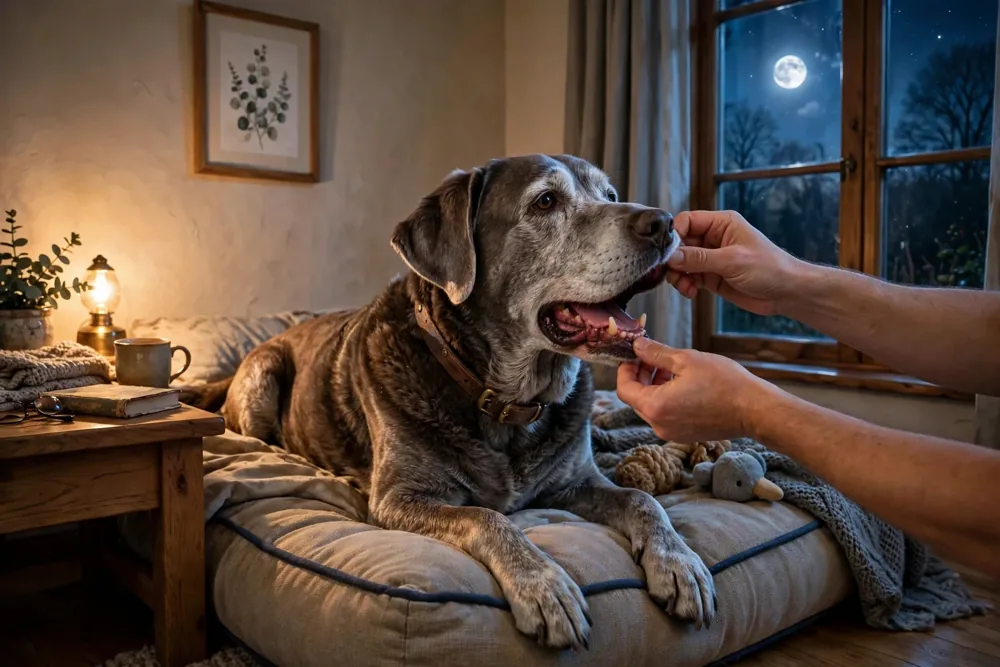
- Look at the gums. Lift the lip gently. Healthy gums are pink and moist; pale, white, gray, or blue-tinged gums are an emergency sign.
- Watch the breathing effort. Relaxed panting, or hard work — belly heaving, neck stretched out, nostrils flaring?
- Check the room. Warm or stuffy? Heavy bed, blanket, or a heating vent nearby?
- Think about the evening. Any change — a new medication, a stressful event, a longer walk, a storm?
9 Causes of Senior Dog Panting at Night
1. Pain — the most overlooked cause
Pain is one of the most common reasons an older dog pants and can’t settle at night, and the one owners miss most. Dogs are stoic; many won’t cry or limp dramatically. Instead they pant, shift position, lick their lips, or get up and lie down repeatedly. Arthritis is the usual suspect: joints that ached mildly by day often feel worse after hours of lying still, and the quiet of night offers no distraction. Dental, back, and belly pain can look the same. If panting is new and your dog also seems stiff or slow to rise, pain belongs at the top of your list. For general pet health guidance, see the AVMA pet care resources.
2. Canine cognitive dysfunction (dog dementia)
Some aging dogs develop canine cognitive dysfunction, similar in many ways to dementia in people. A classic pattern is a flipped day–night rhythm: sleeping much of the day, then becoming restless or confused after dark — sometimes called “sundowning.” Affected dogs may pant, pace, stare at walls, get stuck in corners, or bark at nothing. Panting that comes with confusion rather than obvious physical discomfort often points this way. If your dog also wanders at night, our guide to a senior dog pacing at night and won’t sleep offers a step-by-step evening plan.
3. Anxiety and stress
Older dogs can become more anxious with age. Hearing and eyesight fade, their world becomes less predictable, and things that never bothered them — a creaking house, distant thunder, a changed schedule — can start to feel threatening. Some seniors develop nighttime separation anxiety and pant because their person has gone to bed in another room. Clues include ears pinned back, a tense posture, drooling, yawning, pacing to doors, or sticking close to you like a shadow.
4. Heart disease
An aging heart may not pump as efficiently as it once did. When the heart struggles, fluid can back up toward the lungs and breathing gets harder — and lying flat can make it feel worse, which is why some dogs with heart problems are noticeably worse at night. They may pant, breathe faster at rest, cough (especially lying down), and tire on walks they used to enjoy. A consistently fast resting breathing rate or a new cough deserves a prompt vet visit.
5. Lung and airway problems
Chronic bronchitis, pneumonia, collapsing trachea (common in small breeds), and growths in the chest can all make an older dog work harder to breathe. Dogs with airway issues may pant more at night because they are tired from compensating all day, or because certain lying positions narrow the airway. Wheezing, a harsh or honking cough, or noisy breathing alongside panting points to the chest, not just nerves.
6. Cushing’s disease (a hormone problem)
Cushing’s disease occurs when the body produces too much cortisol, and it is seen most often in middle-aged and senior dogs. Excessive panting is a hallmark sign, often noticed first in the evening. Other clues: drinking and urinating much more than usual, a pot-bellied appearance, thinning hair, and increased appetite. If panting comes with a big jump in thirst, read our guide to an old dog drinking lots of water and peeing in the house — the two symptoms often travel together.
7. The room is simply too warm
Dogs cool themselves mainly by panting, and seniors regulate body temperature less efficiently than young dogs. A bedroom that feels fine to you may be too warm for an old dog in a thick foam bed. Panting that starts soon after bedtime and stops when the room cools or a fan comes on is often just overheating. Flat-faced breeds like Pugs, Bulldogs, and Shih Tzus overheat especially easily and deserve extra caution.
8. Needing to go outside or an upset stomach
Sometimes the answer is wonderfully ordinary: your dog needs to pee. Aging bladders hold less, and some seniors drink more in the evening, so a panting, restless dog may simply be asking for a door to open. Nausea can look similar — lip-licking, drooling, grass-eating. If a quick trip outside solves it, you have likely found that night’s cause.
9. Medication side effects
Several medications commonly prescribed to older dogs can cause panting, most notably steroids such as prednisone, which can also increase thirst, appetite, and restlessness. If panting began within days of starting or changing a medication, note it and tell your vet. Do not stop a prescribed medication on your own, but report it promptly — doses can often be adjusted.
What You Can Do Tonight: Safe Steps That Help
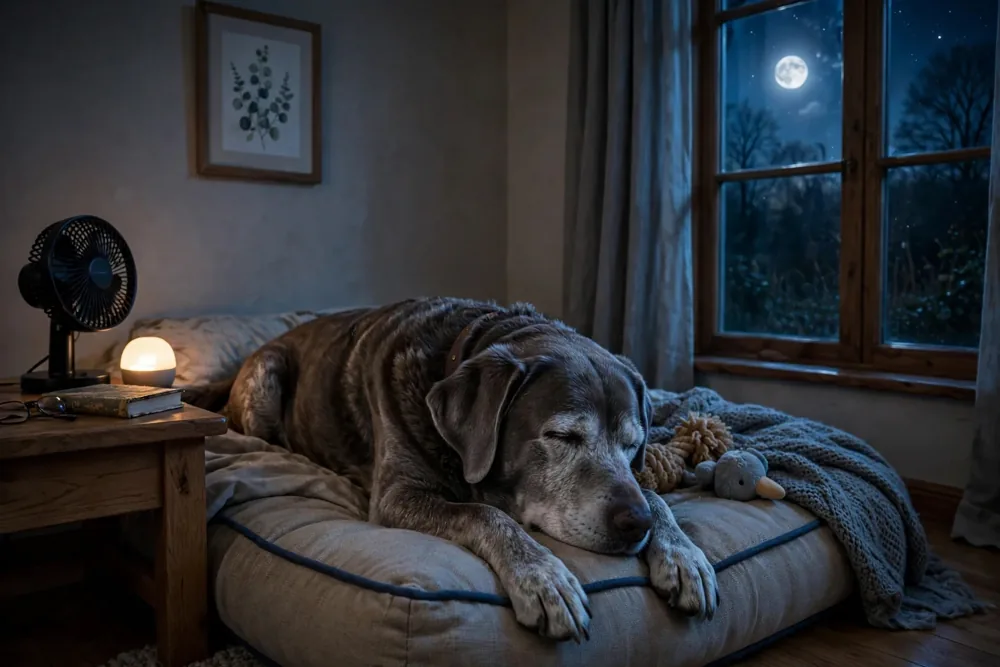
- Cool the room down. Open a window, turn on a fan, or lower the thermostat. Offer a cooler sleeping spot — a tile floor or thinner bed — next to the usual bed and let your dog choose. Skip ice and wet towels; gentle cooling is enough.
- Offer water and a bathroom break. Fresh water within reach, then a calm, short, boring trip outside. Come back in and resettle.
- Lower the stimulation. Dim lights, keep your voice low and slow. Sitting nearby quietly helps some dogs more than constant fussing, which can accidentally reward anxiety with excitement.
- Add a night light. For dogs whose restlessness involves fading eyesight or confusion, a soft night light near the bed can reduce disorientation.
- Do not give human pain medicine. Ibuprofen, acetaminophen, naproxen, and aspirin can be dangerous for dogs. Tonight, the safe move is comfort, notes, and a call to your vet.
- Take a short video. Thirty seconds of panting, plus notes on time and room temperature, is genuinely valuable — dogs often breathe normally at the clinic, and the video shows your vet what you see at home.
- Count resting breaths. Once your dog is nearly asleep, count breaths for 15 seconds and multiply by four. A resting rate that stays high nightly, or is climbing, is a trend your vet wants to know about.
If the panting eases and your dog sleeps, you have bought time — not a diagnosis. One bad night can be a warm room; a pattern of nights is a vet appointment. For more home comfort ideas, see the ASPCA dog care guidance.
When to Call a Vet: The Red Flags
Call an emergency vet now if you see:
- Gums that are pale, white, gray, blue, or brick-red instead of pink
- Breathing that is visibly hard work — heaving belly, stretched-out neck, flared nostrils, loud raspy sounds
- Panting that will not ease after 20–30 minutes in a cool, calm room
- Collapse, extreme weakness, wobbling, or a dog who cannot get up
- A swollen, tight belly, especially with unproductive retching (trying to vomit, nothing comes up)
- Restlessness with drooling and repeated failed attempts to vomit
- Panting after possible toxin exposure, trauma, or overheating on a hot day
- Panting with a seizure, or sudden, dramatic disorientation
Book a regular vet visit soon if:
- The panting happens most nights, even if your dog eventually settles
- It is new, more frequent, or lasting longer than it used to
- It comes with coughing, reduced stamina, weight change, or increased thirst or appetite
- Your dog seems stiff, sore, or slow to get up in the morning
- Your dog has started pacing, barking, or seeming confused at night — early support for cognitive changes works better than late support
At the visit, your vet will typically listen to the heart and lungs, assess pain and mobility, and may recommend blood work, chest X-rays, or other tests. There is no single “panting test” — the exam is how the nine causes get narrowed down. For everyday comfort strategies once pain or anxiety is part of the picture, see our senior dog daily care and comfort guides.
A Note for the Worried Person Holding the Phone
Almost everyone reading this at night feels a little guilty: Should I have noticed sooner? Am I overreacting? Neither. You know your dog’s normal, and when it changes, paying attention is exactly your job. Keep tonight simple — cool room, water, bathroom break, calm company, a short video with notes — then let your veterinarian help you find the reason in daylight.
Frequently Asked Questions
Why does my senior dog only pant at night and not during the day?
At night there are fewer distractions, and pain and anxiety are harder to ignore in a quiet house. Lying flat can make heart or breathing problems feel worse, and dogs with cognitive dysfunction commonly become more restless in the evening. A nightly pattern is worth a vet visit even if your dog seems fine by day.
Should I let my senior dog sleep in a cooler room?
Usually, yes. Most dogs sleep comfortably in a room that feels slightly cool to people. Offer a cooler spot and the normal bed, and let your dog choose. If panting continues in a cool room, work through the other causes and red flags above.
Can I give my dog anything at home to help him sleep?
Do not give human sleep aids or pain relievers — several are toxic to dogs, and sedating a dog panting because of a heart or lung problem can be dangerous. A bathroom break, cooler room, and calm routine are safe. If sleeplessness becomes a pattern, your vet can discuss options suited to your dog.
How long is too long for a dog to pant at night?
Panting from a warm room or brief anxiety should ease within about 20–30 minutes once the cause is removed. Panting that lasts for hours, happens most nights, or is getting worse needs a veterinary exam rather than continued home monitoring.
Is panting at night a sign my dog is dying?
Panting alone does not mean your dog is dying. It is a symptom with many treatable causes, from arthritis pain to hormone issues to a warm bedroom. That said, in a very old or seriously ill dog, new labored breathing always warrants an urgent call. Your vet can assess comfort and quality of life with you honestly — you do not have to interpret these signs alone.
Medical disclaimer: This article is for general education only and is not a substitute for veterinary advice, diagnosis, or treatment. Only a veterinarian who has examined your dog can determine why they are panting. If your dog is struggling to breathe, has pale or blue gums, or collapses, contact your veterinarian or a local emergency animal hospital immediately. Never give human medication unless a veterinarian has specifically directed it.
Read next: Senior Dog Pacing at Night and Won’t Sleep? Calm-Down Plan