
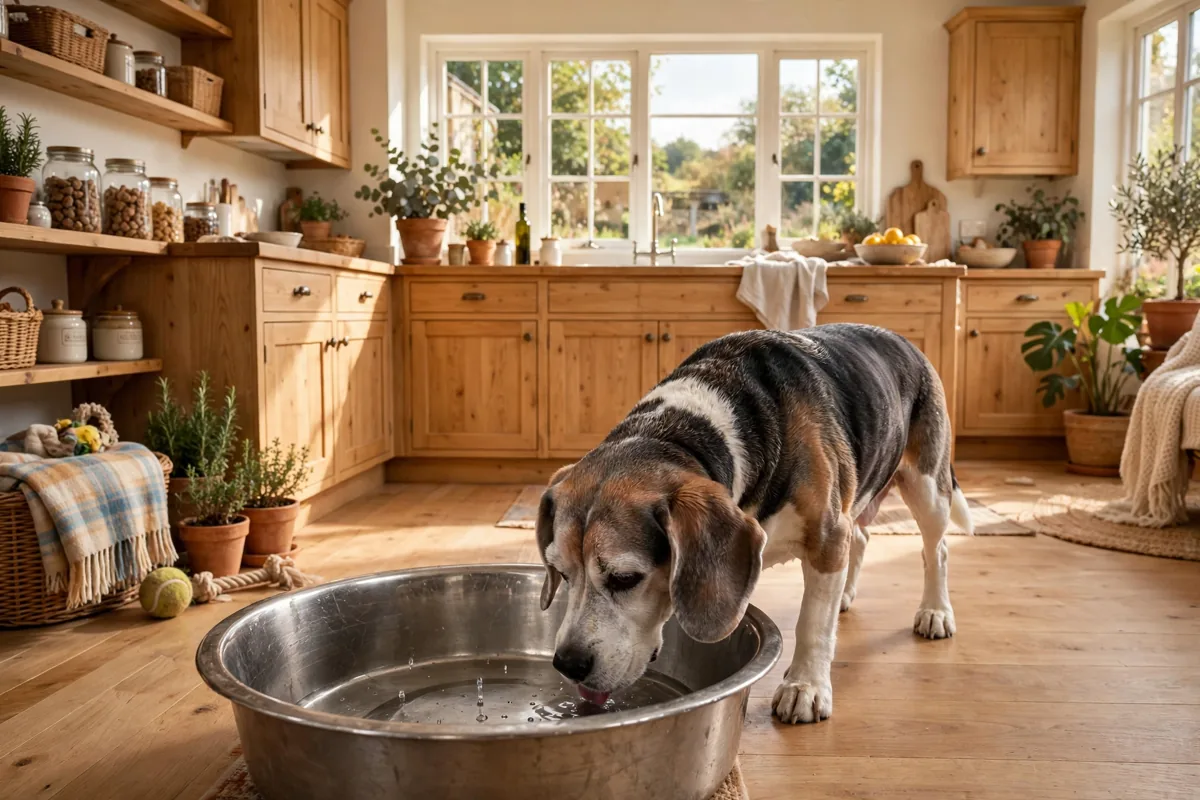
You’ve filled the water bowl three times today. There’s another puddle by the door. And your old dog — house-trained for a decade — looks as confused as you are. Take this in first: this is virtually never spite or stubbornness. Increased thirst and increased urination are medical symptoms, and in senior dogs they are among the most important ones to act on. The likely causes range from a simple urinary tract infection to kidney disease, diabetes, and Cushing’s disease — common in aging dogs and, importantly, many can be managed once identified. This guide explains the causes your vet will consider, how to document the change at home, and which signs mean you should call sooner rather than later. Bottom line: an old dog drinking lots of water is showing a symptom, not a behavior problem.
Table of Contents
First, Understand What’s Actually Happening
Thirst and urination are a linked system. Some dogs pee a lot because they drink a lot; others drink a lot because they pee a lot and the body is trying to keep up. Vets pay attention to the pair together because kidneys, blood sugar, hormones, and several medications all sit in that loop. Normal intake varies with size, diet, weather, and activity, so the best comparison is your own dog’s history. Signs the change is real include:
- The water bowl empties noticeably faster than it used to, day after day
- Your dog seeks water in new places — bathtub, toilets, puddles, other pets’ bowls
- Bathroom trips are more frequent, urine amounts look larger, or your dog asks to go out at night
- Accidents happen despite regular trips outside, often with large, dilute-looking puddles
- The change has lasted more than a day or two and isn’t explained by hot weather
One big drink on a hot afternoon is normal; a persistent new pattern is a symptom.
The Most Common Causes of an Old Dog Drinking Lots of Water
1. Kidney disease
The kidneys filter waste from the blood and concentrate urine so the body keeps the water it needs. As kidneys age and lose function, they concentrate urine less well: the dog urinates more, and in larger amounts, then drinks more to replace the lost water. Kidney disease is one of the most common conditions of older dogs and often develops gradually. Other signs can include reduced appetite, weight loss, a duller coat, bad breath, nausea, and lower energy. Early kidney disease may show almost nothing besides thirst and urination — why this symptom deserves lab work, not watchful waiting. For general pet health guidance, see the AVMA pet care resources.
2. Diabetes mellitus
A dog with diabetes cannot move sugar from blood into the cells properly. Sugar builds up and spills into the urine, dragging water with it — so the dog urinates large amounts and drinks to compensate. The classic picture: a dog who drinks and pees excessively, eats eagerly, and yet loses weight. Diabetes is diagnosable with straightforward blood and urine tests and is manageable, but it does not improve on its own.
3. Cushing’s disease (hyperadrenocorticism)
Cushing’s disease, most common in middle-aged and older dogs, is an excess of the hormone cortisol. It is one of the great imitators of “old dog problems”: heavy drinking and urination, ravenous appetite, a pot-bellied appearance, panting, thinning skin and hair, recurring infections, and muscle weakness. Because the signs overlap so much with normal aging, it is often missed for months. If thirst comes with panting at rest and a growing belly, mention all three at the appointment — and the panting side of the picture is explored in our guide to senior dog panting at night.
4. Urinary tract infection
A bladder infection makes a dog feel the urge to urinate constantly and can cause accidents, straining, cloudy or strong-smelling urine, blood in the urine, and licking around the genital area. A UTI alone usually causes frequent small puddles rather than large volumes, but in a senior it should never be dismissed — infections can also be a signpost to an underlying problem like diabetes, kidney disease, or bladder stones. The good news: a UTI is one of the simplest causes to test for and treat.
5. Liver disease
The liver helps regulate fluids and produces proteins involved in water balance. Liver disease in an older dog can increase thirst and urination, and may also bring appetite loss, vomiting, diarrhea, yellowing of the gums, eyes, or skin (jaundice), and behavior changes — signs that move it up your vet’s priority list.
6. Medications
Several drugs commonly prescribed to seniors increase thirst and urination, with steroids such as prednisone at the top of the list. Diuretics (“water pills,” sometimes used for heart disease) increase urination on purpose, and some seizure medications can contribute. If the change started within days of a new prescription or dose change, draw that line clearly for your vet. Never stop a prescribed medication on your own — some must be tapered — but report the timeline promptly.
7. Other possibilities your vet keeps in mind
Less commonly, the cause may be high blood calcium, an infection of the uterus in an unspayed female (a true emergency — see below), certain hormone imbalances involving the body’s water-regulating hormone, or, rarely, excessive drinking for behavioral reasons. That last one is a diagnosis vets reach only after medical causes are ruled out — in a senior dog, it should never be the first assumption.
What to Do at Home While You Wait for the Appointment
Never restrict water
This point matters enough to say plainly: do not take the water away. It can be tempting when you’re mopping floors at midnight, but a dog losing water through urine needs it to stay hydrated and protect their kidneys. Restricting access can make a sick senior seriously worse, fast. Keep clean water available at all times and manage the accidents instead — more trips outside, washable covers, and patience.
Measure for 24 hours — your vet will love you for it
“Drinking a lot” becomes far more useful as a number. For one full day, measure every cup or liter you pour into the bowl, top up only from your measuring container, and note how much is left at the end of 24 hours. Account for spills and other pets sharing the bowl; even an approximate figure helps. Note your dog’s weight if you know it — your vet can compare intake to body size and track change over time.
Note the pattern, not just the puddles
Keep a simple three-day log: number of accidents, whether puddles are large or small, how often your dog asks to go out, appetite, energy, and anything else new. Also list every medication and supplement, with doses. Owners who bring this log genuinely shorten the road to an answer.
Make life easier tonight
Take your dog out last thing before bed and first thing in the morning. If nighttime accidents are common, try one planned mid-night alarm for a quiet bathroom trip rather than letting your dog wake and worry. Dogs restless through the night for several reasons at once are covered in our guide to senior dog pacing at night and won’t sleep.
When to Call a Vet — And When It’s Urgent
Book an appointment promptly if:
- Increased drinking and indoor accidents have lasted more than 24–48 hours without an obvious short-term explanation like extreme heat
- This is a new pattern in a senior dog, even if he otherwise seems fine
- There is any combination of appetite change, weight loss, lower energy, vomiting, or a duller coat
- A new medication was recently started and thirst changed right after
For this symptom, “promptly” means days, not “at the next annual visit” — most causes here are easier to manage earlier.
Seek urgent or emergency care the same day if you see:
- Straining to urinate with little or nothing coming out, or crying while trying to pee
- Blood in the urine, especially with straining or frequent attempts
- Vomiting, refusal to eat, marked lethargy, or a dog who seems weak or suddenly “not himself”
- A swollen or painful belly
- Signs of dehydration — dry or tacky gums, skin that stays tented when gently lifted — or a dog who has stopped drinking despite urinating a lot
- An unspayed female who is drinking heavily, lethargic, has vaginal discharge, or recently finished a heat cycle — a uterine infection (pyometra) is life-threatening and time-sensitive
- Confusion, wobbling, collapse, or seizures
What the Vet Will Do
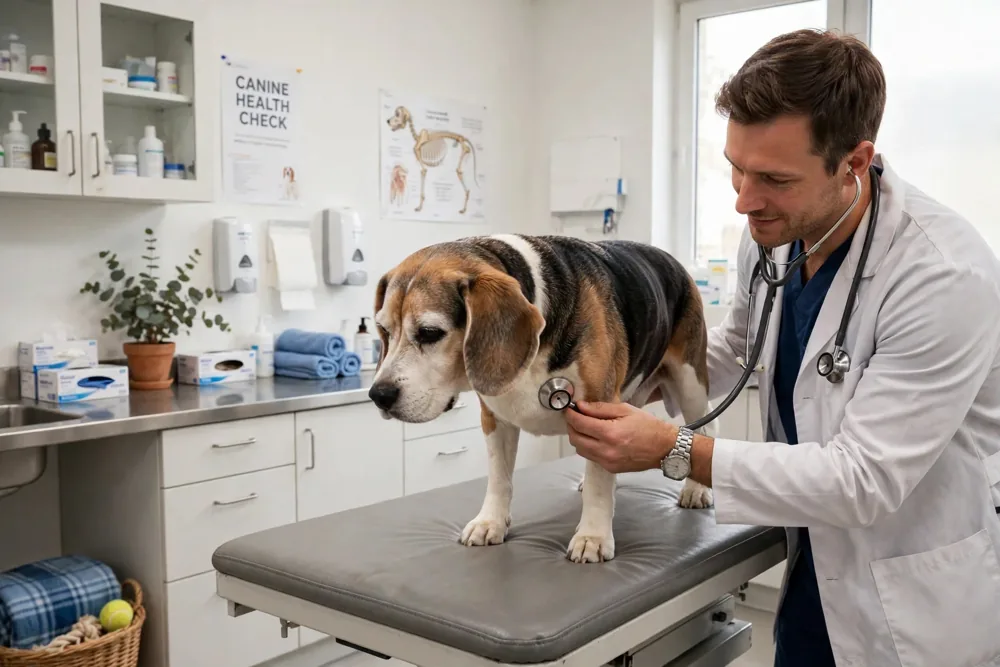
Expect questions (your log and measurement are gold here), a physical exam, and two key tests: blood work and a urinalysis. Blood work looks at kidney values, blood sugar, liver values, and calcium. A urinalysis shows how concentrated the urine is and checks for sugar, infection, and protein; that number alone separates several causes. A urine culture may follow if infection is suspected.
Depending on results, next steps might include blood pressure, imaging, or hormone testing. Treatment is entirely cause-dependent — antibiotics for infection, insulin and diet for diabetes, tailored support for kidney disease — which is why guessing wastes valuable time. One cost note: the initial workup is the same first step for nearly every cause, so you pay once to narrow a long list to a short one. For more on senior dog health, see the Cornell canine health resources.
A Word About the Mop Bucket
Cleaning up after a dog you’ve loved for twelve years can stir up sadness and frustration owners rarely say out loud. Both feelings are normal. What helps is remembering what the puddle actually is: not a training failure, but information — often the first visible sign of a treatable problem. Plenty of dogs on this list, once diagnosed and managed, go back to dry floors and ordinary days. For day-to-day help at home, see our senior dog daily care guides.
Start with the measurement and the phone call — the vet takes it from there.
Frequently Asked Questions
Why is my old dog suddenly drinking so much water?
The most common medical reasons in seniors are kidney disease, diabetes, Cushing’s disease, and urinary tract infection, plus side effects from medications such as steroids. Heat explains a single thirsty day, but a change persisting beyond a day or two needs blood and urine tests to sort out.
Should I limit my senior dog’s water to stop the accidents?
No. A dog urinating excessively needs constant access to water to avoid dehydration and further kidney strain — restricting water can be genuinely dangerous with kidney disease or diabetes. Manage accidents with more bathroom trips and easy-clean setups instead.
My dog pees in the house but isn’t drinking more — is it the same problem?
Not necessarily. Frequent small accidents without increased thirst more often point to a bladder infection, urgency, mobility trouble (the dog can’t get outside in time), or cognitive changes. Note which pattern you are seeing — it is a genuinely useful detail for your vet.
Can increased thirst in an old dog ever be normal aging?
Aging kidneys do lose some efficiency, but “just old age” is not a diagnosis — the conditions behind heavy drinking are themselves diseases of older dogs, and several are very manageable. It is always worth one workup to find out which situation your dog is in.
How quickly do I need to act?
If your dog is bright, eating, and comfortable, book within the next several days and measure water intake meanwhile. Straining to urinate, blood in the urine, vomiting, refusal to eat, marked lethargy, a swollen belly, or an unspayed female who seems ill means same-day urgent. When in doubt, call — vets would always rather hear from you early.
Medical disclaimer: This article is for general education only and is not a substitute for veterinary advice, diagnosis, or treatment. Increased thirst and urination can signal serious illness, and only a veterinarian who has examined your dog and reviewed test results can determine the cause. Do not restrict your dog’s water, and do not start, stop, or change any medication based on this article. If your dog is straining to urinate, vomiting, or lethargic, contact your veterinarian or an emergency animal hospital the same day.
Read next: Senior Dog Panting at Night: 9 Causes and When to Call a Vet