
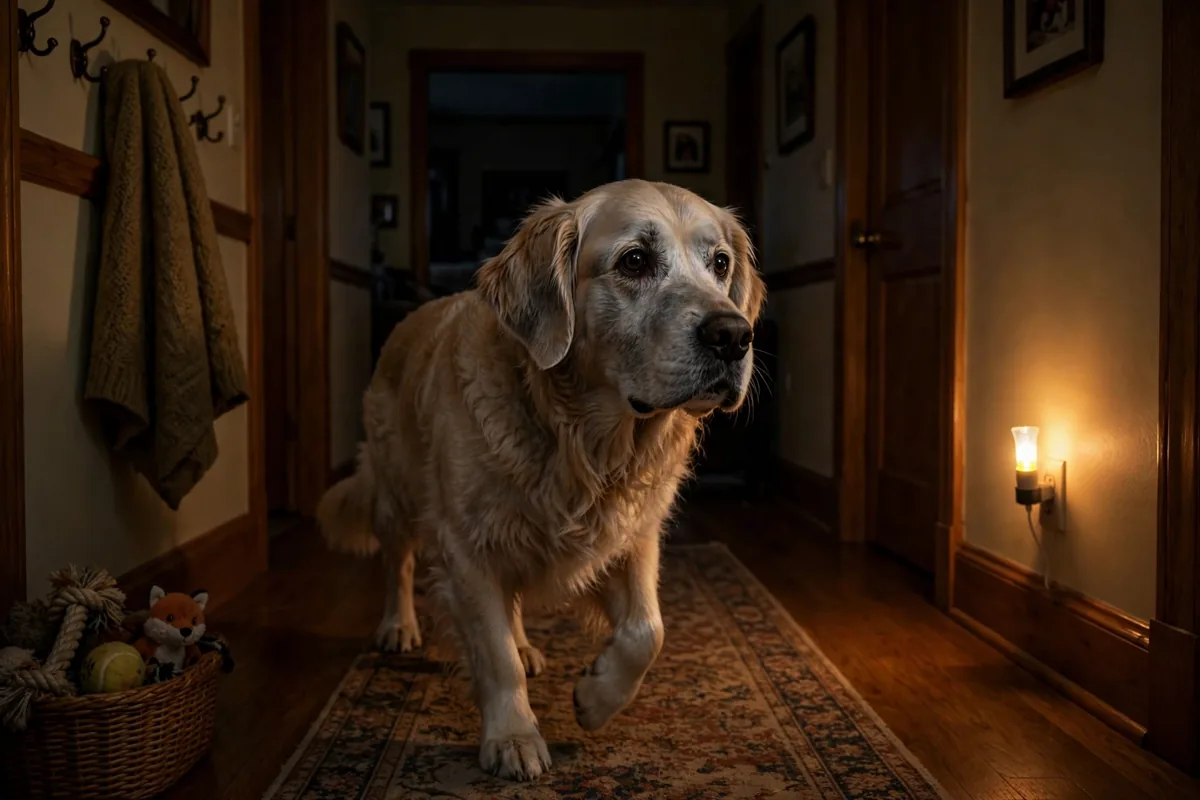
Your senior dog is pacing the hallway again — up, down, circle the bed, stand and stare, lie down for two minutes, then up again — while the whole house lies awake. Here is the honest answer up front: a senior dog pacing at night and won’t sleep is almost never being stubborn or “bad.” Pacing is usually a symptom, most often of canine cognitive dysfunction (dog dementia), pain, anxiety, or a simple unmet need like a bathroom trip. The good news: there is a real plan — the likely causes, a calm-down routine for tonight, daytime changes that help, and the signs that mean the next step is your veterinarian.
Table of Contents
What Nighttime Pacing Usually Looks Like
Pacing is different from a dog who wakes once, asks to go out, and resettles. Owners of pacing seniors describe: getting up repeatedly, walking the same route again and again, standing in doorways or corners as if confused, panting or whining without an obvious trigger, and being unable to stay lying down even when clearly exhausted. Many sleep deeply during the day, then “come alive” in the worst way around bedtime — a strong clue about what may be going on.
The 5 Most Common Reasons for Senior Dog Pacing at Night
1. Canine cognitive dysfunction (CCD)
The leading cause of persistent nighttime pacing in old dogs is canine cognitive dysfunction, a brain-aging condition comparable to dementia in people. Affected dogs may seem confused in familiar rooms, forget they have just been outside, stare at walls, get “stuck” behind furniture, and lose their normal day–night rhythm. If pacing comes with that confusion, CCD belongs at the top of the list — and naming it helps, because once owners understand it is a medical condition, not a behavior problem, frustration usually turns into a plan.
2. Pain that feels worse in the quiet hours
Arthritis, back pain, dental pain, and sore hips can turn the night into a long search for a position that doesn’t hurt. By day, activity provides distraction; at night there is only the ache. A dog who circles far more than usual before lying down, gets up shortly after, pants while standing over the bed, or is stiff in the morning may be pacing from pain rather than confusion. Pain and CCD often occur in the same dog — another reason a vet exam matters even when the story sounds like “dementia.” For general pet health guidance, see the AVMA pet care resources.
3. Anxiety, fading senses, and feeling unsafe
As vision and hearing fade, the nighttime world becomes harder to interpret. Shadows move, the house makes small sounds, and the people they rely on disappear into dark rooms. Some seniors become newly clingy at night, pacing between bedrooms. Others are unsettled by changes a younger dog would shrug off: a recent move, a family member away, the loss of another pet, or rearranged furniture that no longer matches the map in their head.
4. A body that needs something
Not every 3 a.m. episode is cognitive. Dogs pace when they need to urinate, when nauseous, when too hot, and when hungry because dinner was early or a medication increased appetite. Seniors may also drink more in the evening because of kidney disease, diabetes, or Cushing’s disease, and then genuinely need the door opened more often. If pacing reliably ends with a long pee, start there — and if thirst itself has changed, see our guide to an old dog drinking lots of water and peeing in the house.
5. Not enough day
A dog who sleeps most of an empty day will have restlessness left over at night. Seniors still need gentle exercise, sniffing, social time, and small mental challenges matched to their ability. Under-stimulation rarely causes all-night pacing alone, but it amplifies every other cause here — fixing the day is an underrated part of fixing the night.
Tonight’s Calm-Down Plan, Step by Step
Run these steps in order when the pacing starts, keeping your own manner slow and boring.
- Bathroom first, every time. Take your dog out calmly on a leash, lights low, no play. Many episodes end right here. If your dog pees and still cannot settle, move on.
- Do the comfort check. Is the room warm? Offer fresh water. Run a gentle hand over your dog’s body: any flinching or guarded spot? Check the bed is clean, dry, and where it usually is — moving a senior dog’s bed can itself cause a confused night.
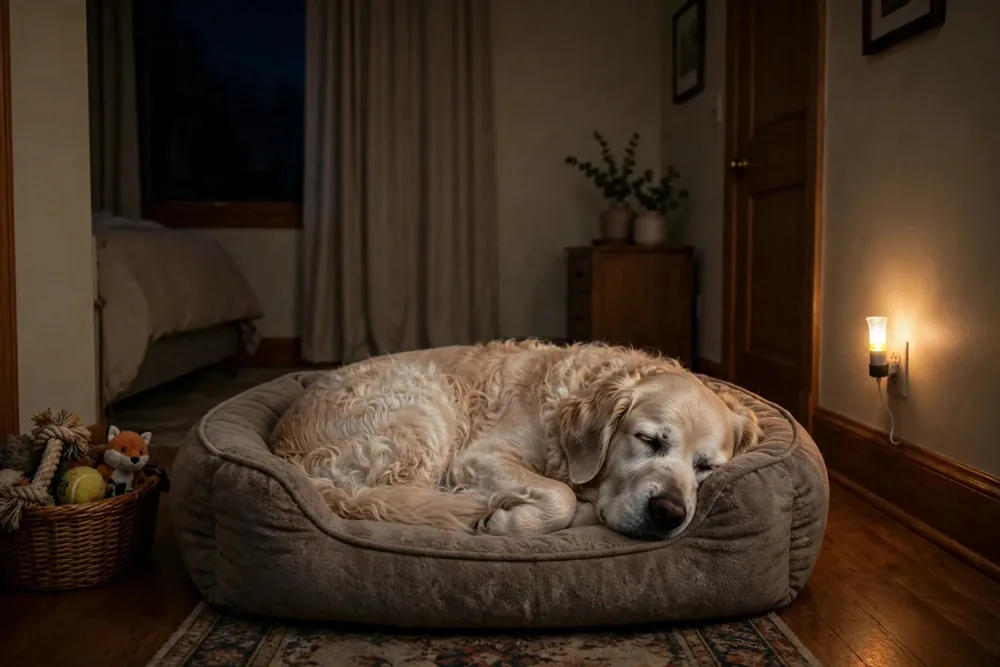
- Reset the room. Dim lights, turn on a soft night light in the hallway and near the bed, and reduce sudden noise. Dogs with fading eyesight navigate a gently lit, familiar room far better than a pitch-black one.
- Settle with presence, not excitement. Sit near the bed a few minutes, a slow hand on your dog’s side, and the same short phrase (“You’re okay, time to sleep”) in a flat, sleepy voice. If your dog reliably settles near you, consider moving the dog bed into your bedroom — proximity is a legitimate fix for many anxious seniors.
- Offer one low-key chew or lick mat — once. For anxious (rather than confused or painful) dogs, a few minutes of licking can help the nervous system downshift. Keep it small and early; you are building a sleep cue, not serving a midnight meal.
- Note it down. Time, duration, whether a bathroom trip helped, anything unusual about the day. A week of these notes is the most useful thing you can hand your vet.
If pacing comes with heavy panting and drooling, pain or something more urgent may be driving it — see senior dog panting at night.
The Evening Routine That Makes Nights Better
One calm night is triage; a predictable routine is treatment. Dogs with aging brains and aching joints rely on sameness, so build the same sequence every evening:
- Late afternoon: the day’s main gentle exercise — a slow walk with lots of sniffing stops, scaled to your dog’s ability. Sniffing is mental work and tires a dog in a healthy way.
- Early evening: a short, easy enrichment session — a snuffle mat, treats hidden in a folded towel, or simple practiced cues for rewards. Keep it winnable; frustration is the opposite of what you want before bed.
- Dinner at a consistent time — not right before bed, and not so early that hunger wakes your dog at 4 a.m. If your vet agrees a small bedtime snack helps, make it the same small snack nightly.
- A final bathroom trip as the last step before lights out, every night, whether your dog asks or not.
- The same sleeping setup: same bed, same room, same night light, same quiet background sound if you use one — a fan or low radio helps some dogs by masking household noises.
- Wind the house down gradually, rather than going from bright and busy to suddenly black and silent.
Give consistency about two weeks to show its full effect, and change one thing at a time — constant change is itself confusing to a dog with cognitive changes. For more home comfort ideas, see the ASPCA dog care guidance.
Daytime Changes That Pay Off at Night
If your dog is drifting toward sleeping all day and waking all night, gently interrupt the pattern: short walks, brief play, simple games, and social time spread through the day, with real rest in between. The goal is not to keep an older dog awake — it is to anchor their deepest sleep to the night by making the day pleasantly full. Keep your own schedule consistent too. For more gentle daytime ideas, browse our daily care tips for senior dogs.
What Not to Do
Don’t scold or punish pacing — your dog is not doing this at you, and punishment only adds fear to confusion or pain. Don’t start human sleep aids or leftover medication; several are toxic to dogs, and sedating a dog whose restlessness comes from a breathing problem can be dangerous. Don’t flood your dog with new calming products at once — introduce one at a time. And don’t assume it’s “just age”: pacing that is new or worsening deserves an appointment.
When to Call a Vet
Book an appointment within the next week or so if:
- Pacing happens most nights, or is steadily increasing
- You notice daytime confusion, staring, getting stuck, or changes in how your dog interacts with the family
- House-training is slipping despite regular bathroom trips
- Your dog seems stiff, sore, or reluctant to exercise
- Appetite, weight, thirst, or urination has changed alongside the pacing
- Nobody in the house has slept properly in a week — caregiver exhaustion is a valid reason to call
Call urgently, day or night, if:
- Pacing comes with a swollen belly, retching without vomit, drooling, or obvious distress — this can be an emergency
- Your dog cannot settle because breathing is labored, fast, or noisy
- There is sudden collapse, severe weakness, or a seizure
- Pacing follows a possible toxin ingestion or a fall
At the vet, expect a physical exam, pain and mobility assessment, and often blood and urine tests to rule out internal causes that imitate dementia. Bring your notes and, if you have one, a short video. Depending on findings, your vet may discuss pain management, diets and supplements for brain aging, environmental changes, and whether medication for anxiety or cognitive dysfunction is worth trying. No cure turns back the clock, but many pacing dogs sleep noticeably better once the right cause is treated.
You Are Not Failing Your Dog
Owners of pacing seniors often feel a mix of love, exhaustion, and guilt — guilt for feeling frustrated with a dog they adore. That frustration is normal; it usually means the current plan isn’t enough, not that you aren’t doing enough. Book the vet visit, share night duty if you can, and remember: asking for help early is good care.
Frequently Asked Questions
Is pacing at night always a sign of dog dementia?
No. Cognitive dysfunction is the most common cause of persistent nighttime pacing in seniors, but pain, anxiety, and internal diseases can look very similar — and causes often overlap in the same dog. That’s why a vet exam with basic lab work is worthwhile even when dementia seems obvious.
How can I tell if my dog is pacing from pain or from confusion?
Pain-related pacing often includes position-hunting — circling, lying down, getting straight back up — plus panting or stiffness. Confusion-related pacing looks more aimless: corners, staring, seeming lost in familiar rooms. Many dogs have both, so treat this as a clue for your vet, not a home diagnosis.
Should I let my pacing senior dog sleep in my bedroom?
If proximity settles your dog, yes — sleeping in the same room is a simple, legitimate comfort measure, in a dog bed on the floor if your bed isn’t practical. Keep the setup the same nightly, with a night light.
Do calming supplements or pheromone products help?
Some owners find pheromone diffusers or calming supplements modestly helpful for anxiety-driven restlessness, and diets for aging brains are part of many vets’ CCD plans. None replaces a diagnosis, so ask your vet, introduce one thing at a time, and judge by your notes — not one good or bad night.
How long should I try a new routine before deciding it isn’t working?
About two weeks of consistency, with nightly notes. Look for trends — episodes starting later, ending sooner, happening less often. No improvement after two weeks is useful information for your vet, not a failure on your part.
Medical disclaimer: This article is for general education only and is not a substitute for veterinary advice, diagnosis, or treatment. Only a veterinarian who has examined your dog can determine what is driving the pacing and what treatment is safe. If your dog shows a swollen belly, unproductive retching, labored breathing, collapse, or a seizure, seek emergency veterinary care immediately. Never give human sleep aids or pain medication unless a veterinarian has specifically directed it.
Read next: Old Dog Drinking Lots of Water and Peeing in the House: Causes